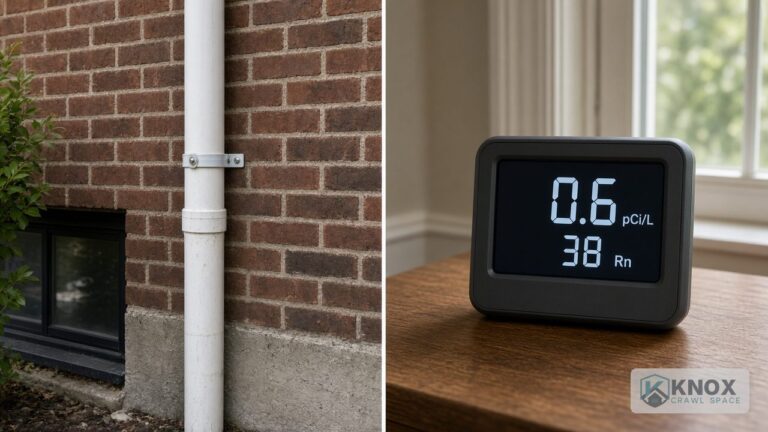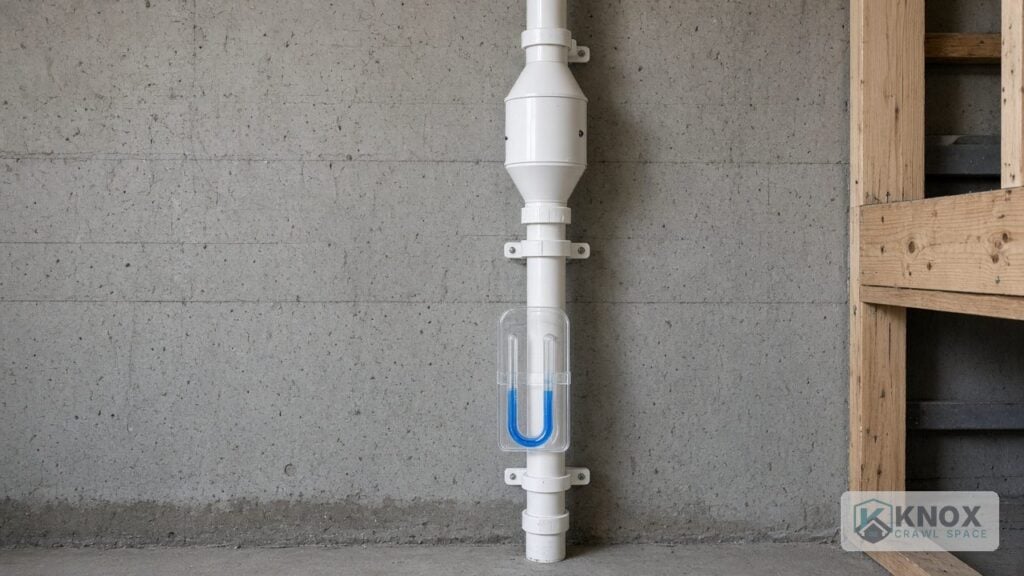
A working radon mitigation system has a fan that runs all the time and a warning device, usually a U-tube of colored fluid on the pipe, that stays uneven. That gauge shows suction in the pipe, not the radon level in the house. The only way to know the radon number is still low is to test the air.
If the fluid in the gauge is level, if the fan is silent or the pipe is vibrating in a new way, or if an alarm light or buzzer is on, treat the system as down until someone checks it. Then retest after it is running again.
Here is the simple homeowner check, what the gauge can and cannot tell you, and when a new radon test is the real answer.
The manometer is a suction gauge. It is not a radon test. A pretty reading on the pipe does not replace a lab or monitor result.
Start with the gauge and the fan
Most active soil-suction systems have a U-shaped tube of fluid mounted on the pipe, often in the garage, a closet, or the crawl space. When the fan is pulling, the fluid is higher on one side than the other. When the two sides are even, there is no suction, which usually means the fan has stopped or something else in the system has failed.
The U.S. EPA says radon reduction systems need occasional maintenance, that you should look at the warning device on a regular basis, and that the fan should never be turned off (EPA: How do I know if my radon mitigation system is working properly?; EPA Consumer’s Guide to Radon Reduction).
If the installer wrote the original gauge reading on a sticker next to the tube, compare what you see now with that number. A reading that is level, or clearly different from the sticker, is a reason to check the simple things and then call a contractor if it stays off. The gauge still does not measure radon. It only tells you the fan is pulling.
The simple checks before you call
Make sure the small tube from the gauge to the pipe is connected and not kinked. Confirm the fan has power, and that a switch, GFCI, or breaker has not tripped. Listen for the fan. A healthy fan is a steady, low hum, not a rattle or a dead silence.
Look at the exhaust above the roof if you can do so safely from the ground. You should not see the pipe crushed, disconnected, or blocked by a nest or debris. Do not climb on a roof for this. If the simple checks do not bring the gauge back, the fan or another part of the system needs service.
The fan will not last forever
The EPA notes that fans may last for five years or more, that manufacturer warranties tend not to exceed five years, and that the fan may then need to be repaired or replaced. A stopped fan means the system has stopped doing its job. Get it replaced, then test the house again. Our page on how a mitigation system is put together shows the usual parts if you want the physical picture.
Retest. The gauge is not enough.
The EPA says it is a good idea to retest your home at least every two years to be sure radon levels remain low, even when the system looks fine. Retest after a fan replacement, after a major renovation, or if you have any reason to think the system was off for a while.
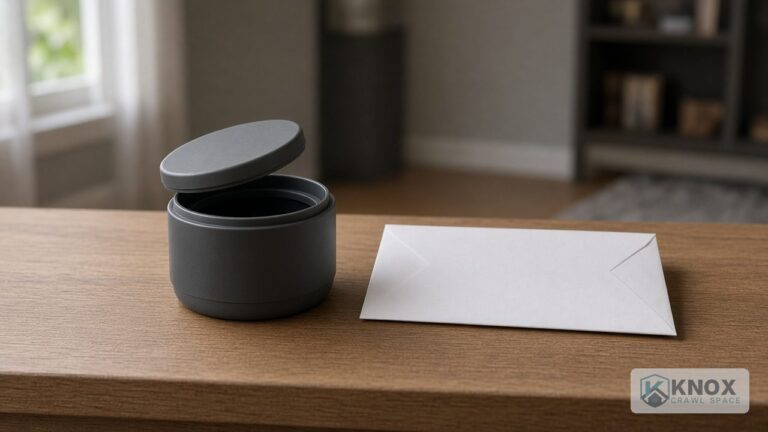
A short-term test under closed-house conditions is the usual way to check a system that is already in place. If you want a kit mailed to you, Tennessee’s free state test kit is built for homeowners, not for a real-estate deadline. If you need a certified result on a clock, a continuous monitor run by a pro is the better tool.
Already looking at a house that has a system? Walk through our five-point check for a house with an existing system. If you are the one who just had a system installed, the first confirmation test has its own window in the EPA Consumer’s Guide: no sooner than 24 hours after the fan starts, and within 30 days. For how that follow-up test works, see radon testing in Knoxville.
Is my radon system working? FAQ
What if the fluid in the U-tube is level?
Treat the system as down. Check power and the gauge tubing, then call a radon contractor if the fluid stays level. Retest the house after the system is running again.
The fan is loud. Is that a problem?
A new rattle, grind, or vibration is worth a service call. A steady, modest hum is normal. Noise alone is not a radon reading.
Can I turn the fan off in the summer?
No. The EPA says the fan should never be turned off. The system only works while it is pulling.
How often should I look at the gauge?
Often enough that you would notice a change, such as when you change a filter or walk past it each month. Pair that habit with a radon retest at least every two years.
Does a good gauge reading mean my radon is below 4?
No. The gauge only shows suction in the pipe. Only a radon test tells you the number in the air.