A new radon mitigation system is not finished until a follow-up test says the number came down. The EPA says to retest no sooner than 24 hours after the system is running, and within 30 days of installation. A two-to-seven-day test is the recommended check, under closed-house conditions.
The installer may test their own work. The EPA still recommends an independent follow-up, or a test you run yourself, so the result does not depend on the same company that put the system in.
Here is the EPA’s window, who should run the test, and what to do with the result before you call the job done.
Keep the fan running during the test. Turning it off to “see what happens” is not a confirmation test, and the EPA says the fan should never be turned off.
The EPA’s window: 24 hours to 30 days
The EPA Consumer’s Guide to Radon Reduction is direct on timing. A post-mitigation radon test should be done within 30 days of system installation, but no sooner than 24 hours after the system is in operation with the fan on. To test the system’s effectiveness, a two-to-seven-day measurement is recommended. Windows and doors must be closed 12 hours before and during the test, except for normal entry and exit.
That window is easy to miss in a real-estate closing. If the system goes in on a Thursday, you cannot treat a test that started an hour later as the official confirmation. You also should not wait months. Put the retest date in the contract or the work order, and leave time for it.
Who should run the test
The contractor may run a test to check their work. The EPA recommends that you also get an independent follow-up radon measurement, because that removes a conflict of interest. You can hire a certified tester, or you can run a kit yourself if you are not on a contract deadline.
Tennessee does not license radon testers. TDEC points consumers to the NRPP and NRSB directories (TDEC Radon Program). If you hire someone, ask for a certification number and look it up. On a home-sale deadline, a continuous monitor is usually the right tool, the same way it is for the original test. Our page on how a certified short-term test is run covers the clock. For a homeowner confirmation with more time, the free Tennessee kit can work, as long as you still respect the 24-hour wait and the 30-day window, or you schedule a later check if the kit cannot be returned in time.
Where to place it, and what number you want
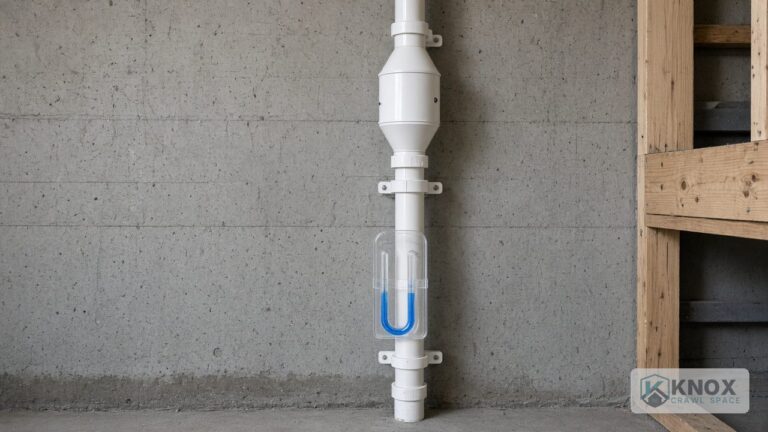
Test in the lowest level of the home that is regularly used, under the same kind of closed-house conditions as any short-term test. You are checking whether the system brought the living space down, not whether the pipe has suction. The manometer on the pipe is a separate check.
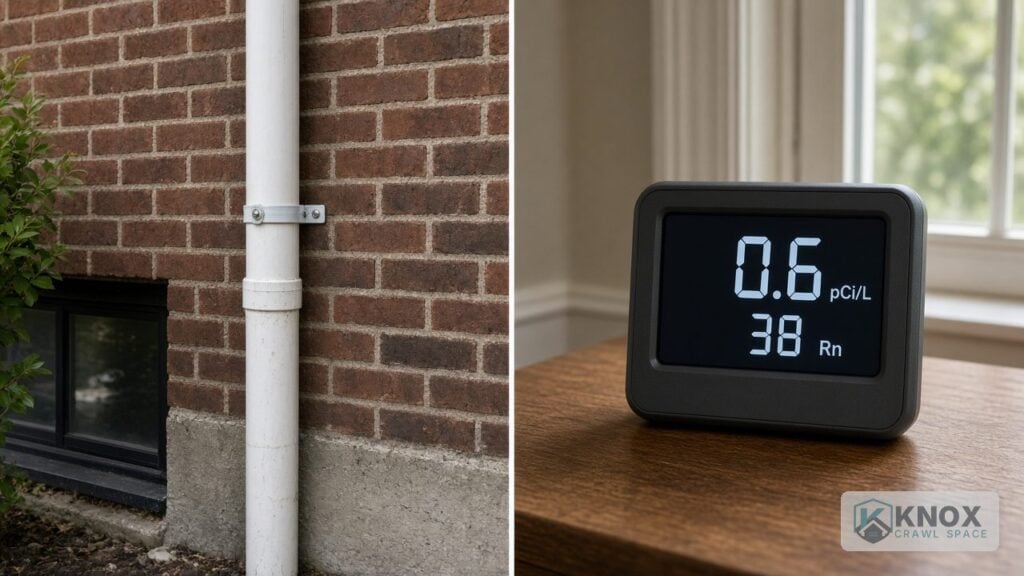
The EPA’s action level is still 4.0 pCi/L. The goal of mitigation is a result under that number, and lower is better. If the follow-up test is still at or above 4.0, the system needs more work, not a shrug. Call the installer with the report in hand. If you are deciding what a number means in general, how to read a radon result walks through the ranges.
After the first passing test
Keep the paperwork: the installation date, the system layout, the fan model and warranty, and both the pre-test and the post-test reports. The EPA also says it is a good idea to retest at least every two years to be sure levels remain low. A passing post-mitigation test is the start of that record, not the last test the house will ever need.
Post-mitigation radon test: FAQ
Can the installer just test it the same day they finish?
Not as the official confirmation. The EPA says to wait at least 24 hours after the fan is on, and to finish the test within 30 days.
Is the installer’s test enough?
It is useful, but the EPA recommends an independent follow-up or a test you run yourself so the result does not come only from the company that did the work.
What if the post-test is still over 4.0?
The system is not done. Share the report with the contractor and ask what they will change. A second confirmation test should follow any extra work.
Do I have to keep closed-house conditions for the retest?
Yes, for a short-term test. Close windows and exterior doors 12 hours before and during the test, except for normal coming and going.
Should I retest after the first year?
The EPA recommends retesting at least every two years even when the system looks fine, and sooner if the fan was replaced or the house was renovated.