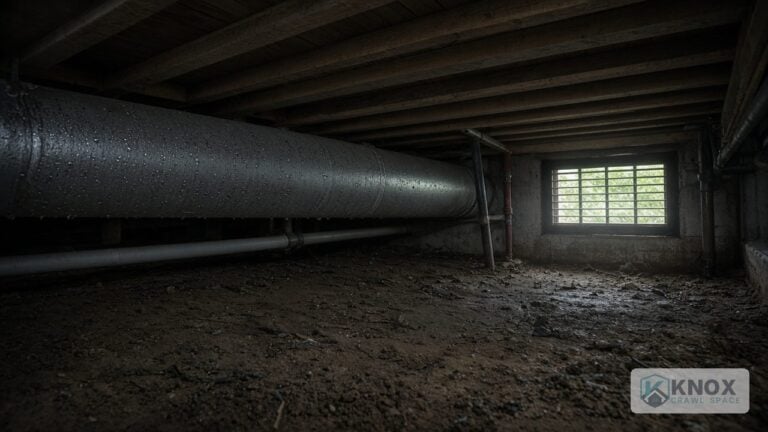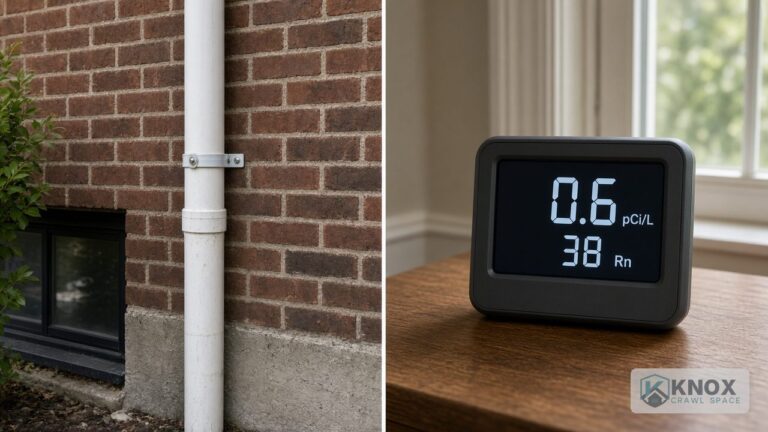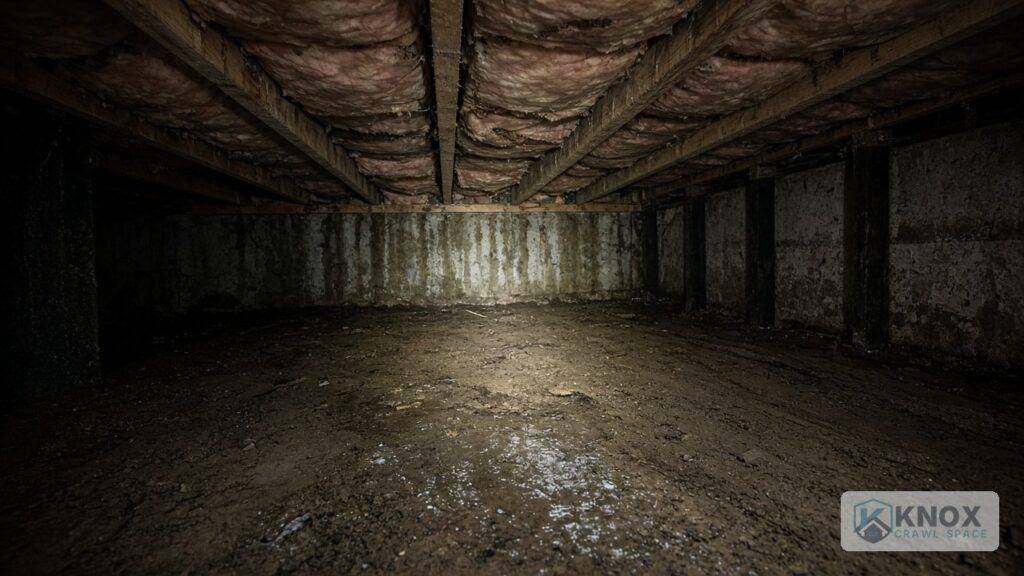
A wet crawl space is a common inspection finding in Knoxville, and it is often fixable. Before you close, you want three things in writing: where the water is coming from, what it has already done to the wood and insulation, and a scope for the repair with a real price.
A little damp soil after a wet week is not the same problem as standing water, rotten joists, or a space that is still wet between rains. The first one may be a drainage tweak. The others are a bigger job, and they should show up in the negotiation.
Below is how to read that inspection note, what to ask before you waive it, and how to use a written scope so you are not guessing at closing.
This is general information, not a home inspection or legal advice. Your purchase contract, your inspector, and your agent or attorney control the details.
What a wet crawl space usually means around here
Inspectors in East Tennessee see a few different versions of “wet,” and they are not the same repair.
Sometimes the soil is damp and the air feels heavy, but there is no standing water. That can be humidity, especially in a vented crawl space in summer, or a vapor barrier that was never installed or has come loose. Sometimes you get puddles or a sheen of water after a storm, which usually means water is coming in from outside. And sometimes the water is still there days later, or the joists, band board, or insulation already show damage.
The useful first question is not “is it wet?” It is “is this water coming from the yard, from the air, or from a leak in the house?” A liner or an encapsulation will not fix a gutter that dumps against the foundation. Our guide to how water actually gets under a Knoxville house walks through the usual paths.
What the inspector can, and cannot, tell you
A standard home inspection is a snapshot. The inspector can report standing water, stained or damaged wood, hanging insulation, rusted or sweating ducts, a musty smell, and whether a vapor barrier is present and intact. That is valuable. It is also limited.
They usually cannot watch the space through the next heavy rain. They may not measure humidity over several days, and they may not open finished floors or move stored items. If the report flags moisture but leaves the cause open, that is a reason to get a closer look, not a reason to shrug it off.
A focused crawl space inspection with photos and moisture readings can fill that gap. You want pictures, a plain-language cause, and a written scope you can hand to the seller, not just a sentence that says “moisture present.”
Questions to ask before you waive the repair
Start with the source. Did the inspector see a path from the outside, like short downspouts, a negative grade, or a blocked drain? Or does the report read more like condensation on the ducts and damp air? Those are different jobs.
Then ask about the structure. Are the joists, sills, and band board solid, or is there decay, insect damage, or sagging? Surface moisture is one thing. Soft wood is another, and it may involve a carpenter or a structural repair before any liner goes down. If the floors above slope or bounce, this guide to sagging floor repair explains what is usually failing. Cracked or settling foundation walls are a separate question; see foundation repair in Knoxville.
If a vapor barrier or an old encapsulation is already in place, ask whether it is holding water underneath or around the edges. A liner sitting in a puddle is a sign the water problem was never solved. And if the air-conditioning ducts run through the crawl space, ask whether they are sweating. That is a humidity problem, and it will keep dripping after you move in if nobody dries the air.
What is usually fixable, and what should slow you down
| What you are seeing | How serious it usually is | Typical first move |
|---|---|---|
| Damp soil, no puddles, wood looks sound | Often manageable | Find the moisture source, then a liner or a fuller seal if the space stays humid |
| Puddles after rain that dry out | Drainage problem | Gutters, grading, and exterior water control before any encapsulation |
| Standing water that lingers | Bigger water job | Drainage and, in many cases, a sump and discharge line |
| Soft wood, sagging floors, or heavy mold on joists | Get a closer look before you close | A structural or repair assessment, then the moisture work |
The pattern to watch is simple. If the space gets wet when it rains and then dries, start outside. If it stays wet, or if the wood is already damaged, do not treat a liner as the whole repair. A liner is not a substitute for getting standing water out and keeping it out. Wet materials should be dried, not covered over.
One EPA point that does apply in a house you are about to buy: wet materials should be dried within 24 to 48 hours when you can, and indoor humidity is best kept below 60 percent, ideally in the 30 to 50 percent range (EPA, A Brief Guide to Mold, Moisture and Your Home). A crawl space that stays wetter than that between rains is not a cosmetic issue.
How to use a written scope in the negotiation
Do not accept a vague credit labeled “crawl space work.” Ask for a written scope that says what will be done, in what order, and for what price. If water is coming in from outside, drainage belongs in that scope first. If the plan is a sealed crawl space, the scope should say so clearly, including drying equipment and a drain for it, not just a sheet of plastic.
From there the choices look like any other inspection repair. The seller can do the work before closing, with a chance for you to confirm it. You can take a credit or a price reduction based on the written quote, if your lender allows it. Or you can do the work after you move in, with your eyes open about cost and timing.
If you want a sense of what a sealed crawl space involves, this overview of a full encapsulation is the commercial picture. The negotiation still starts with the cause of the water, not with a product name.
Buying a house with a wet crawl space: FAQ
Should I walk away from a house with a wet crawl space?
Not automatically. Many Knoxville crawl spaces with a clear water source and sound wood are repairable. Walk more carefully if the structure is damaged, the water has no obvious source, or nobody will put a real scope and price in writing.
Is a wet crawl space a deal killer for the lender?
It depends on the lender, the appraiser, and how bad the conditions are. Some loans will require a repair before closing. Ask your lender early, and do not assume a credit will satisfy them.
Can the seller just put down a vapor barrier?
A ground liner helps in a dry space. If water is coming in from the yard, a liner can hold that water in place. Get the source fixed first, then talk about a liner or a fuller encapsulation.
Who pays for the crawl space work in a Tennessee sale?
There is no special rule. It is negotiated like any other inspection repair. A written quote makes that conversation about a number, not a guess. If the issue is the foundation itself, here is what drives foundation repair cost.
Should I test for radon too if the crawl space is wet?
Yes, test the house for radon either way. Moisture work and radon work can affect each other in a crawl space, but a wet space does not replace a radon test. Run the test during the inspection window.