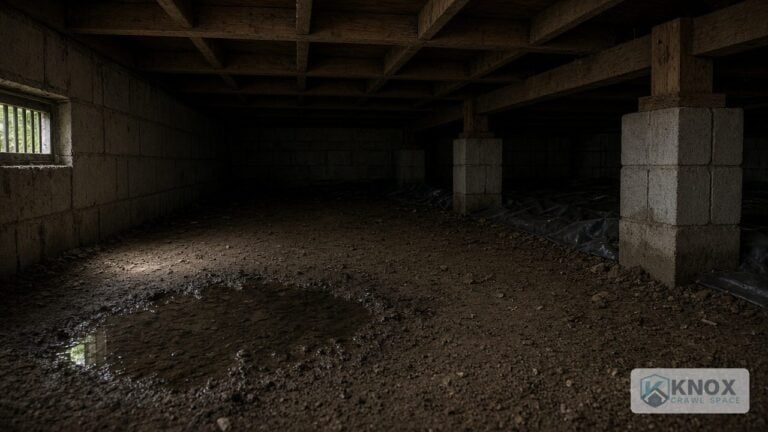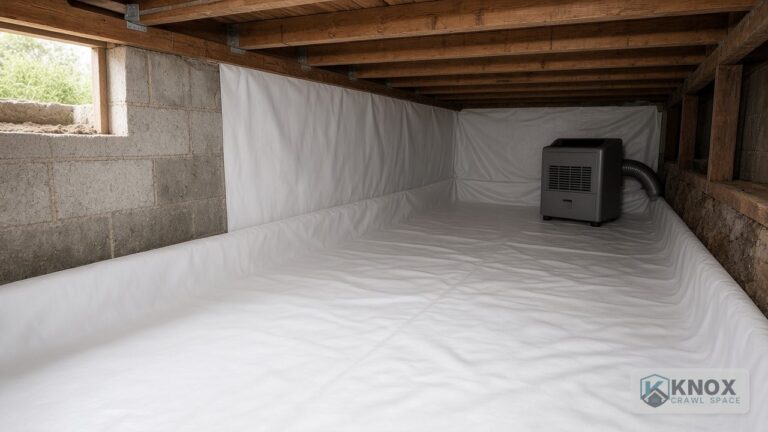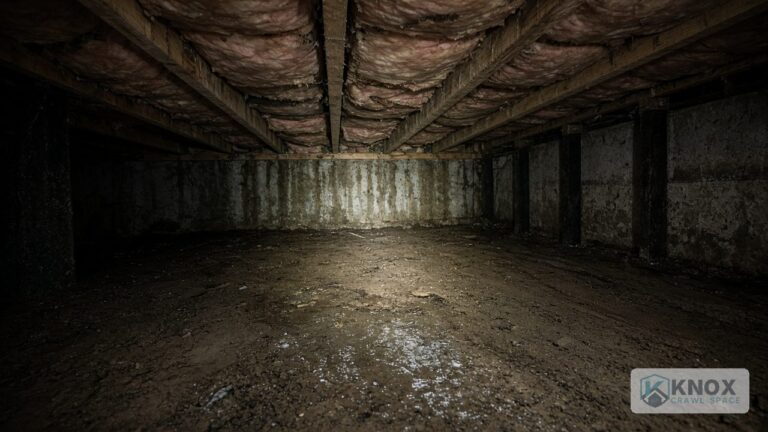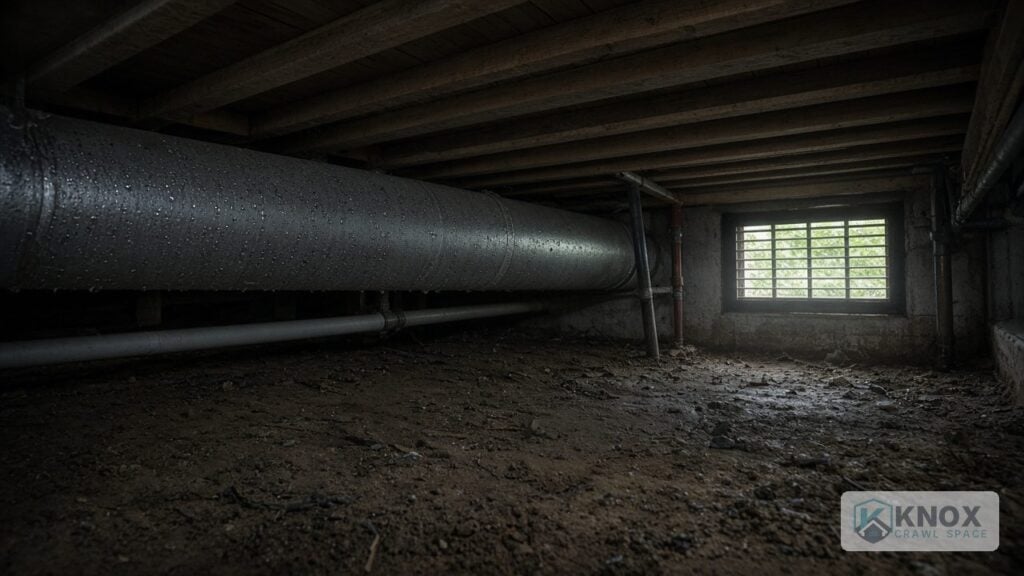
In an East Tennessee summer, a vented crawl space often gets wetter, not drier. Warm, humid outdoor air comes in through the vents, hits cooler soil, wood, and air-conditioning ducts, and leaves moisture behind.
A ground liner helps with soil moisture, but it does not stop that incoming air. The usual way to bring summer humidity down is to close the vents, seal the space, and dry the air with a properly drained dehumidifier, or with conditioned air, depending on the design.
Here is why July is so hard on a vented crawl space around Knoxville, how to tell humidity from a rain leak, and what actually brings the number down.
The humidity numbers in this article come from EPA indoor-air guidance and from federal Building America research. They are not measurements we took in a particular Knoxville house.
Why summer air makes a vented crawl space wetter
The old idea behind crawl space vents was that fresh air would dry the space out. In a humid climate, the air coming in is often wetter than the air already under the house. Building America research on unvented crawl spaces starts from that point: in humid climates, outside air entering through vents can lead to moisture, mold, and pest problems, not a drier space (U.S. Department of Energy, Building America).
That is a good description of a Knoxville July. Afternoon air is warm and wet. Under the house, the soil and the floor system stay cooler. When that air reaches cool ducts or cool wood, moisture can condense on the surface. You see it as sweating ducts, damp joists, and insulation that looks like it has been rained on, even when it has not.
The EPA’s mold and moisture guide recommends keeping indoor relative humidity below 60 percent, and ideally between 30 and 50 percent, to help limit mold. A vented crawl space in mid-summer can sit well above that range on many days, which is why a liner-only job often still smells musty in August.
Humidity or a leak? Use the calendar and the weather
If the space is damp on dry, hot days, and especially if the ducts are dripping, you are looking at humidity. If puddles show up during or right after a storm and then shrink, that is liquid water from outside, which we cover in whether standing water after rain is normal. You can have both. Fix the rain path first if it is there. Then deal with the air.
What actually brings summer humidity down
Closing the vents without a plan can trap whatever moisture is already in the space. The useful combination is a sealed liner, closed vents, and a way to dry the air. In this climate that is usually a crawl space dehumidifier with a drain that actually goes somewhere, not a bucket you forget to empty. Our page on how a crawl space dehumidifier is sized and drained is the equipment picture. The decision about whether a sealed space needs one is a separate question, and the short answer in East Tennessee is usually yes.
A vapor barrier alone, as we explain in when a ground liner is enough, does not stop vent air. If you want the full sealed system, what an encapsulation includes is the commercial overview.
What you can check yourself
A inexpensive hygrometer in the crawl space, read on a few summer afternoons, will tell you more than a single glance. Look at the ducts, the insulation, and any rust or staining on the floor system. If you use a dehumidifier already, look at how often it runs and whether its drain is clear. A unit that never shuts off, or a bucket that overflows, is a sign the space is still open to a large moisture load, or that the unit is undersized or cannot dump the water.
Crawl space humidity in summer: FAQ
Should I open the vents wider in July to dry the space out?
Usually no. In this climate, more open vent area often means more humid air coming in. Drying comes from sealing the space and removing moisture, not from inviting July air under the house.
Will the air conditioner in the house dry the crawl space?
Not reliably, if the crawl space is still vented to the outdoors. The house system is cooling the rooms, not the dirt and the vents underneath.
What humidity should I aim for?
The EPA’s indoor guidance is below 60 percent relative humidity, and ideally 30 to 50 percent. Use that as a target for a sealed crawl space, not as a promise that a vented space will get there on its own in July.
Is a musty smell in summer a mold problem?
It is a moisture problem first. A musty smell means the space is damp enough to support odor and, often, mold growth. Find and cut the moisture, then deal with what is growing.
Can I wait until fall to deal with it?
You can, but summer is when the damage and the smell usually get worse. If ducts are dripping onto wood or insulation, it is better not to let another season pass.