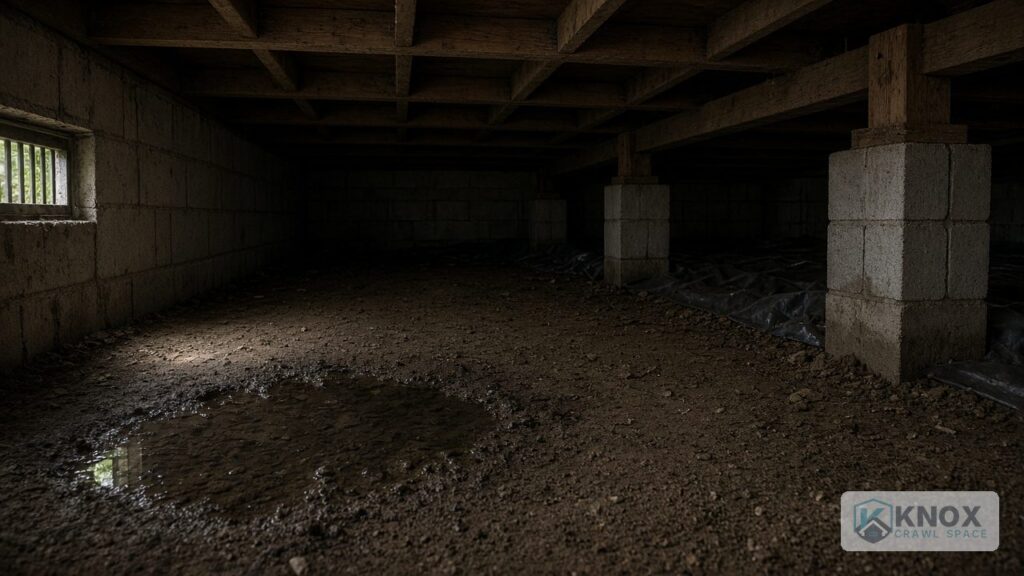
No. Standing water in a crawl space after rain is not a normal feature of a healthy space. It is a sign that water is getting in from outside, usually from gutters, downspouts, grading, or a path through the foundation, and that has to be fixed as a water problem, not as a humidity problem.
A little damp soil in humid weather is a different issue. A puddle, a sheen, or a low spot that fills when it storms is drainage. If you put a liner down first, you can trap that water under or on top of the plastic.
Here is how to tell storm water from summer humidity, where the water usually comes from in East Tennessee, and what to fix first.
If you already have standing water, do not crawl the space after a storm if the electrical or the footing looks unsafe. Get the water out, then have the space looked at when it is safe to enter.
Storm water and humidity are not the same problem
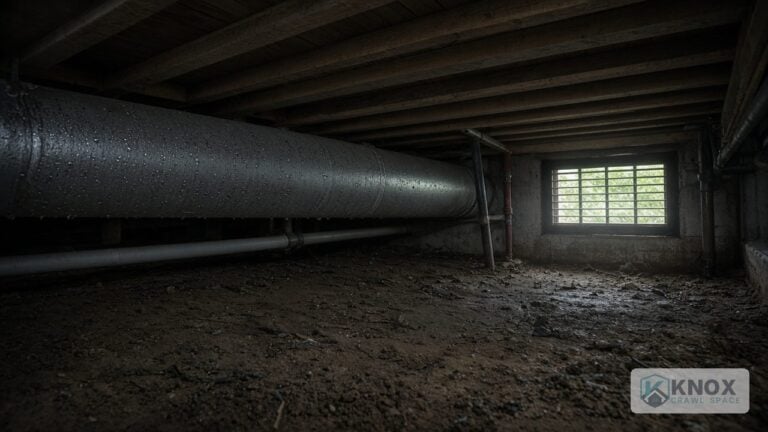
East Tennessee summers are humid, and a vented crawl space can feel wet even when it has not rained. That is air moisture, and it shows up as condensation on ducts, damp wood, and a musty smell. Standing water after a storm is liquid water with a path in. You can have both at once, but you cannot treat them as one job.
A simple field test is timing. If the puddle appears during or right after rain and then shrinks, look outside: gutters, downspouts, the slope of the soil, a driveway or patio that tips toward the house, or a blocked drain. If the space is damp on dry days too, or only the ducts are sweating, you are also dealing with humidity.
Where the water usually comes from around Knoxville
Clay soil around much of Knox County does not soak up a heavy rain the way sand would. Water that hits a clogged gutter or a downspout dumped at the foundation has to go somewhere, and the crawl space is an easy destination. Negative grade, where the soil slopes toward the house, does the same thing. So do sunken window wells, an open or unsealed crawl door, and cracks or gaps at the sill.
Inside the space, look for a clear low corner, muddy splash marks, and rust or silt on the foundation. Those marks often show the path more honestly than the puddle you happened to catch on the day of the inspection. For the usual routes and repairs, see how crawl space water is traced and controlled.
What to fix first
Start outside. Clean and extend the gutters, improve the grade so soil falls away from the foundation, and give roof water a place to go that is not the crawl space. If water still arrives, a drainage system or a sump with a discharge line may be part of the job. A crawl space sump is a tool for water that gets in, not a substitute for stopping the easy outside paths.
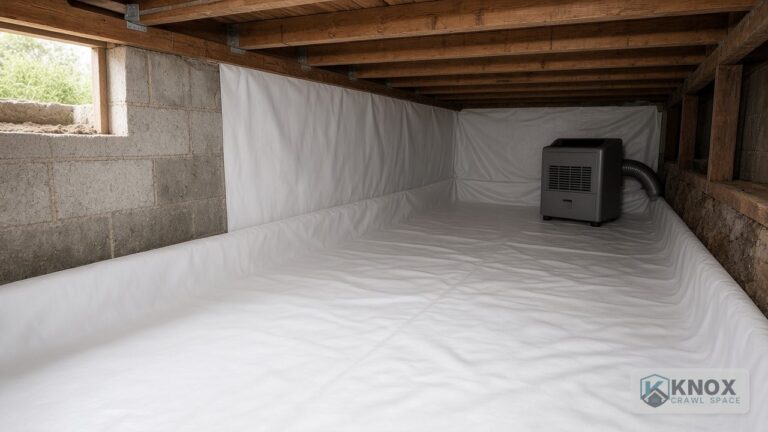
Only after the liquid water is under control should you talk about a vapor barrier or a full encapsulation. The EPA’s moisture guidance is to dry wet materials and control the source, not to cover a wet area and hope (EPA mold and moisture guide). The same guide says to dry water-damaged materials within 24 to 48 hours when you can.
When a puddle is a bigger warning
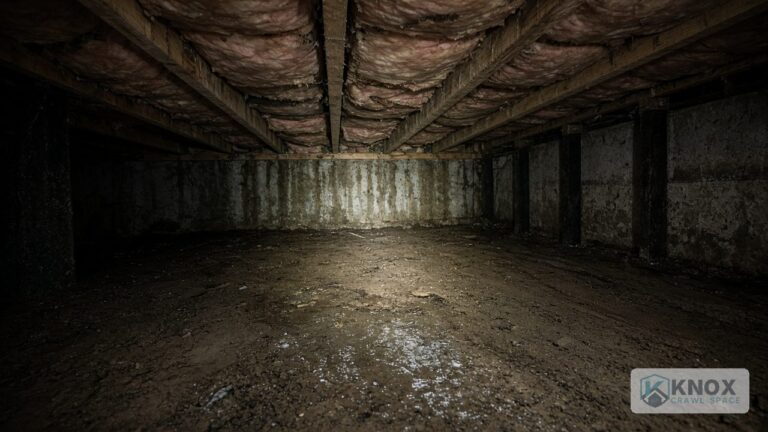
A one-time puddle after an unusual storm, with sound wood and a clear outside cause, is usually a drainage repair. Recurring standing water, soft joists, a sagging floor, or insulation that has been wet for a long time is a bigger condition. Get photos, a written cause, and a scope before you cover anything up. If the foundation walls show cracks or bowing too, foundation repair in Knoxville covers how that gets diagnosed.
Standing water after rain: FAQ
Is a little water after a heavy storm really a problem?
Yes, if it is standing in the crawl space. Even if it dries later, it is showing you a path. Fix the path so the next storm is not a repeat.
Will a dehumidifier get rid of the puddles?
No. A dehumidifier removes moisture from the air. It will not pump out a puddle or stop water that is coming in from the yard.
Should I put a vapor barrier down over the wet soil?
Not as the first step. A liner can trap water. Get drainage under control, then install a liner or a sealed system on a space that can actually stay dry.
Can this affect the rooms above?
It can. Musty odors, cupping floors, and high indoor humidity sometimes start in a wet crawl space. The rooms are a symptom. The water path is still the thing to fix.
Do I need a sump pump?
Only if water still collects after the outside drainage is improved, or if the space has a clear low point that takes on water. A sump is a decision based on the conditions, not a default add-on.