A crawl space vapor barrier can be enough if the space stays dry, the soil is the main moisture source, and the wood and insulation are in good shape. In a lot of East Tennessee houses, a ground liner is only the first step.
If the crawl space is vented to a humid summer, if water comes in after rain, or if you are trying to control humidity in the rooms above, you are usually looking at a fuller encapsulation, not a sheet of plastic alone.
Here is how to tell which job you actually have, and why a liner and a sealed crawl space are not the same repair.
A vapor barrier is a ground cover. Encapsulation is a sealed system. If a quote uses those words interchangeably, ask the contractor to say exactly what is included.
What a vapor barrier actually does
A crawl space vapor barrier is a heavy plastic liner laid over the soil and, in a careful job, sealed at the seams and run a short way up the foundation walls. Its job is to stop water vapor rising out of the ground. In East Tennessee clay, that soil moisture is real, and a continuous liner is a genuine improvement over bare dirt.
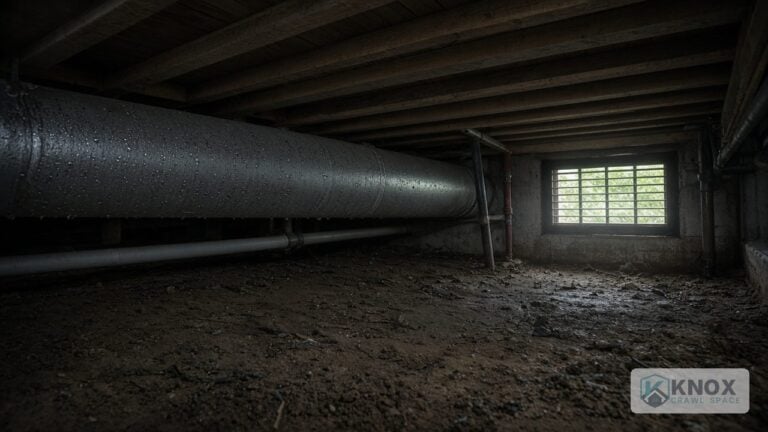
What it does not do is stop humid outdoor air from coming through the vents. It does not fix gutters that spill against the house, and it does not dry the air once moisture is already in the space. Those are separate problems, which is why a liner can look “done” on a photo and still leave you with sweating ducts and a musty smell in July.
If you want the picture of a liner-only job, how a sealed ground liner is installed is the right page. This article is about when that job is enough, and when it is not.
When a liner is a reasonable stopping point
A vapor barrier is often enough when all of these are true: the crawl space does not take on standing water, the wood is sound, the vents are not pouring humid air into a chronically wet space, and your goal is to cover the soil and cut that ground-driven moisture.
That is a real, useful job. It is also a smaller job. If a contractor recommends only a liner, ask how they know the space stays dry after a heavy rain, and what they would add if humidity in the space stays high in summer.
When you need more than a ground liner
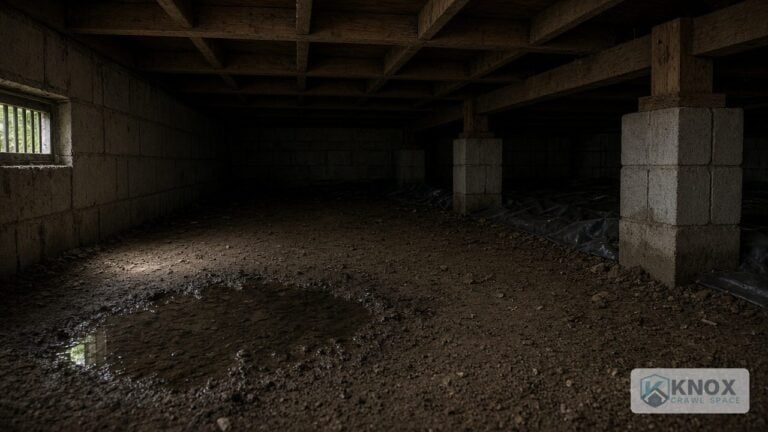
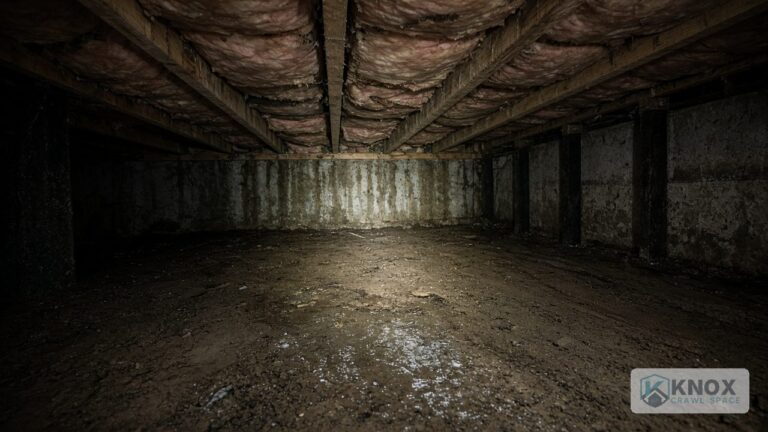
You need a bigger plan if water ponds after storms. A liner in a puddle just holds the water in a plastic tub. You also need more than a liner if the space is vented and stays humid every summer, if the ducts or pipes are sweating, if insulation is wet or hanging, or if you want the crawl space to stay in a drier range month after month.
The EPA’s mold and moisture guide recommends keeping indoor humidity below 60 percent, and ideally between 30 and 50 percent. A vented crawl space in a Knoxville summer often cannot stay in that range with a ground liner alone, because the vents keep feeding in humid air.
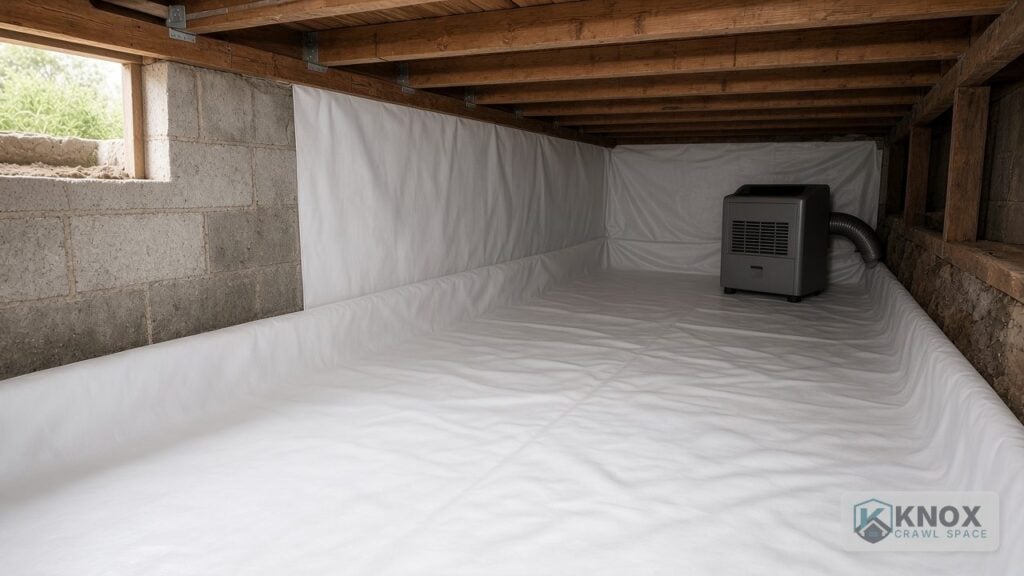
A full encapsulation closes those vents, seals the liner up the walls, and adds a way to dry the air, usually a crawl space dehumidifier with a real drain. That is a different system, and it costs more. The overview of what a sealed crawl space includes is the place to see the parts. Building America research found that unvented, conditioned crawl spaces can use 15 to 18 percent less energy for heating and cooling than traditional vented ones, and can reduce humidity by more than 20 percent (U.S. Department of Energy). Those figures come from that research, not from a promise about your utility bill.
A simple way to choose
| Condition | Liner may be enough | Plan on a fuller seal |
|---|---|---|
| Standing water after rain | No | Yes, after drainage is fixed |
| Bare soil, dry space, sound wood | Often yes | Optional, if you also want humidity control |
| Sweating ducts or a musty smell in summer | Usually no | Yes |
| You want the space used as a drier, cleaner area | No | Yes |
If you are buying or selling, get this distinction into the written scope. A credit for “a vapor barrier” is not the same as a credit for a sealed, dried crawl space, and the prices are not close.
Vapor barrier vs encapsulation: FAQ
Is a 6-mil or 12-mil liner thick enough?
Thicker liners hold up better in a crawl space you may have to enter later. Thickness alone does not make a liner into an encapsulation. Sealed seams, wall coverage, and a plan for water and humidity matter more than the mil rating on a photo.
Can I add encapsulation later if I start with a vapor barrier?
Often yes, if the liner is clean, continuous, and not trapping water. Ask the contractor whether they can work with what is already down or will need to replace it.
Will a vapor barrier stop mold?
It can reduce soil moisture, which helps. It will not stop mold if humid air or liquid water still has a path in. Mold control starts with moisture control, not with a sheet of plastic by itself.
Does a vapor barrier lower radon?
A ground liner is not a radon mitigation system. Closing a crawl space without a fan can even change how soil gas moves. If radon is a concern, test the house and use a designed radon system, not a liner alone.
Which job should I get quotes for?
Ask each contractor to price the job they actually recommend, with the parts listed. Then you can compare a liner-only scope to a sealed crawl space scope, instead of comparing two different jobs that share a name.